

taking offence
Taking offence often reveals more about our own attachments than the actions of others. It can be a sign that we’ve invested meaning in something deeply personal – an idea, a symbol, or a belief – and assumed that others should share in that meaning. When they don’t, it can feel like an affront, not because there was an intention to offend, but because our expectations were not met.
At the heart of this reaction is the assumption that what we value must also be valued by others. And when that doesn’t happen, we interpret it as a personal attack which becomes an opportunity to both affirm and assert our attachment or identity. But is it right to hold others accountable for beliefs they don’t agreed with themselves?
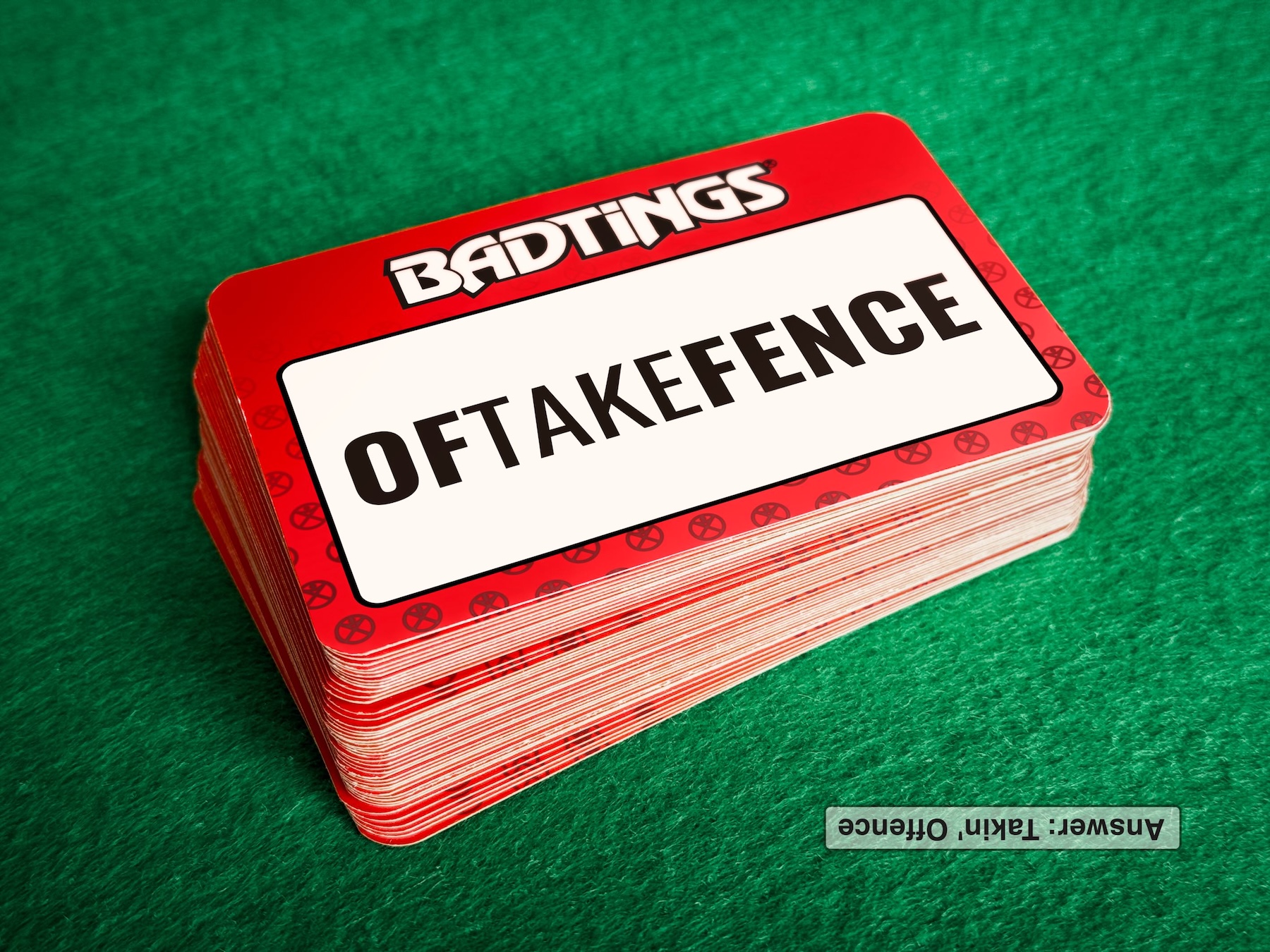
Take, for example, a book. Physically, it’s paper, ink, and binding. Spiritually or symbolically, it might hold deep meaning for some. A bible, a sacred text, or any cherished book may have personal or cultural significance. But that is not inherent in the object – it is conferred by belief. And belief, by definition, is subjective.
If someone uses a book as a doorstop – not to offend, but simply because it’s at hand – we might be tempted to see that as disrespectful if we have bestowed meaning onto that book. But is it truly an offensive act, or just a moment where different interpretations meet? To take offence in such a case is not only to reinforce that symbolic value, but to expect that value to be universally accepted. And when it isn’t, we take it personally. That is the real trap – not the act, but the insistence on shared reverence.
The same can be said of any symbol: a crucifix, a flag, a football team. We may feel they represent something vital, but the symbol itself is inert – its power lies in how we see it, not in what it is. And when others don’t share that view, the urge to react can obscure an opportunity to reflect: “Why do I actually believe this? Why do I feel threatened by someone else’s indifference?”
With borrowed beliefs and limited understanding, we judge the world by the measure of our own ignorance.
Beliefs and symbols invariably create divisions, causing us to label others as enemies just because they see the world differently, or have differing beliefs. And whenever we take sides – whether in religion, politics, sport, etc. – it often leads to hostility, which is the physical manifestation of taking offence. Offence becomes the seed of resentment, and resentment the path to conflict.
To move beyond that, it’s better to question our own vulnerability as to why we believe what we do, and why we give meaning to symbols and objects, rather than taking offence the moment someone else doesn’t agree with us.
Humans are destroying the planet, and with it, the future of life. Unbelievably, 85% of those humans still identify with a religion, most of which promise an eternal afterlife in the company of an invisible god somewhere beyond the material universe. They build monuments to those beliefs, wage wars in the name of their god, and spend much of their lives hoping to secure a place in that paradise – while neglecting the very real world that gave them life, a reality more awe-inspiring than anything they can imagine.
If we must believe in something, it makes sense to believe in LIFE, because the evidence for it is all around. Believing in a mythical god should not give anyone the right to disrespect the natural forces which, ironically, gave them the means to do so.
There is a growing tendency for people to use themselves as the subject upon which they can be offended, where taking exception to their opinion, values, or other subjective identifier is enough to provoke indignation. This belief in an unyielding sense of self-righteousness is not only intolerant – as it reflects an unwillingness to accept that our diverse influences and inherent limitations will naturally lead to a range of perspectives – but it also reveals a deeper vulnerability and godlike arrogance. Their identity is so fragile that the slightest challenge triggers an aggressive and thoughtless reaction, which is completely contrary to our natural tendency to learn and embrace a more comprehensive understanding of the world we all share.
Assimilating new information, even when it invalidates our previously held beliefs, is the only way towards consensus and the dissolution of the divisions which stand in the way of realistically mitigating the crisis we all face.
Many people undoubtedly find comfort and inspiration by believing in surreal possibilities, but we should be more concerned as to why those needs aren’t being met by tangible, real-world offerings, rather than investing hope in unverifiable hearsay. The reason is that the world we’ve created is so dysfunctional that it fails to meet our true human needs, so we’re forced to look outside that dysfunction for answers. Unfortunately, it’s not a solution, more of a distraction, because all we’re doing is avoiding the problems rather than fixing them. There is genuine purpose and meaning in fixing our world – both very real human motivations. That is where we should focus our energies.
Aug 2024